Grand fir trees are a familiar part of Greater Victoria’s landscape, but many are struggling with longer, drier summers. Browning needles, thinning canopies and dying branches can be worrying, particularly when the tree is close to a home. It is one of the most common concerns we hear about as a tree service Victoria homeowners rely on.
The first thing to understand is that “grand fir disease” is not one specific disease. Grand fir (Abies grandis) can decline because of drought stress, root diseases, insects or a combination of these problems. Identifying the cause matters because the options for helping the tree are different in each case.
Why Are Grand Fir Trees Struggling in Victoria?
Grand firs are native to coastal British Columbia, but increasingly dry summer conditions can put them under significant stress. Saanich’s 2024 Urban Forest Strategy identifies grand fir, western redcedar and western hemlock as native trees struggling with drier summers.
There are three main concerns for homeowners:
- Drought stress. Extended periods of hot, dry weather limit the water available to the tree. Damage can build over several summers.
- Root disease. Fungi can damage roots and reduce the tree’s ability to absorb water and nutrients. Severe infections can also affect stability.
- Secondary pests and diseases. Trees already weakened by drought or damaged roots can become more vulnerable to insects and other tree diseases common in Victoria.
These problems often overlap. A tree affected by root rot may look drought-stressed because its damaged roots cannot take up enough water. Equally, a tree with a thinning canopy may be suffering from drought without having a fungal infection.
How to Spot Grand Fir Problems Early
Watch for changes in the tree’s canopy, growth and trunk, especially if symptoms become worse from one year to the next.
- Yellowing or browning needles at branch tips. This may indicate drought stress or disease, particularly when new growth is affected.
- A thinning or dying treetop. Dieback in the upper canopy can be a sign of significant water stress or root problems.
- Entire branches turning reddish-brown. This warrants attention, especially when several branches are affected.
- Less new growth in spring. Shorter shoots and reduced growth can indicate ongoing stress.
- Mushrooms or fungal growth near the trunk base. Some fungi are associated with root decay, although mushrooms alone do not confirm a diagnosis.
- Unusual resin flow near the lower trunk. Heavy resin around the root collar can sometimes be associated with root disease or other injury.
Early detection can be difficult. According to the Pacific Northwest Plant Disease Management Handbook’s guidance on laminated root rot, visible canopy symptoms may not appear until a substantial portion of the root system has already been damaged. Reduced growth at the top of the tree can be one of the first visible signs.
Not All Brown Needles Mean Disease
Grand firs naturally shed some older needles, often in autumn. When older needles turn yellow or brown closer to the trunk while the outer branch tips remain green, it may be normal seasonal shedding.
More concerning signs include browning at the branch tips, entire branches dying, or progressive thinning throughout the canopy. If you are unsure, take photos of the same branches and the overall crown so you can compare changes over time.
Common Diseases and Pests That Affect Grand Fir
Laminated Root Rot
Laminated root rot is caused by the fungus Coniferiporia sulphurascens. It spreads mainly through contact between infected and healthy roots. The BC Ministry of Forests identifies grand fir as one of the species most susceptible.
Infected trees may develop reduced growth, yellowing foliage and canopy dieback. Because the disease can decay structural roots, a severely affected tree may also become more likely to fall.
Can it be treated? There is no practical treatment that reliably cures an established infection in a mature tree. A professional assessment can help determine whether the tree poses a risk and whether nearby trees also need attention.
Armillaria Root Rot
Armillaria is another fungal root disease that can affect grand fir. Symptoms include thinning foliage, declining growth and sometimes heavy resin flow near the base. Clusters of honey-coloured mushrooms may appear around affected trees in autumn, although their absence does not rule out the disease.

The fungus can persist in infected roots and old wood. The Pacific Northwest Plant Disease Management Handbook notes that grand fir can be severely damaged by Armillaria.
Can it be treated? There is no simple homeowner treatment for an established infection. Managing severely affected trees, which can include tree removal, and choosing appropriate replacement species are often more realistic than attempting to cure the disease.
Needle Diseases and Insect Damage
Grand firs can also experience needle diseases and insect infestations. These may cause discoloured needles, premature needle loss or declining growth. One pest to be aware of is the balsam woolly adelgid, which can leave white, wool-like material on affected firs. Grand fir is generally less susceptible than some other true fir species, but symptoms still warrant identification before treatment.
Not every needle problem is fatal. The important step is to identify the cause rather than applying a general pesticide or fungicide.
What Can Homeowners Do to Protect a Grand Fir?
Homeowners cannot prevent every disease, but reducing stress gives a healthy or mildly affected tree the best chance of remaining resilient.
1. Water Deeply During Dry Weather
For established trees, use slow, deep watering across the root zone rather than applying water only beside the trunk. The amount and frequency will depend on the tree’s size, soil and site conditions.
For younger trees, Saanich recommends approximately 20 litres per watering, twice a week during dry periods. Mature grand firs have much larger root systems, so that quantity should not be treated as a watering target for a mature tree. Follow current local water-use rules.
2. Apply Mulch
A layer of approximately 5 to 8 cm of organic wood-chip mulch can help conserve moisture, moderate soil temperatures and reduce competition from grass. Spread it over as much of the accessible root area as practical, but keep it away from direct contact with the trunk.
3. Protect the Root Zone
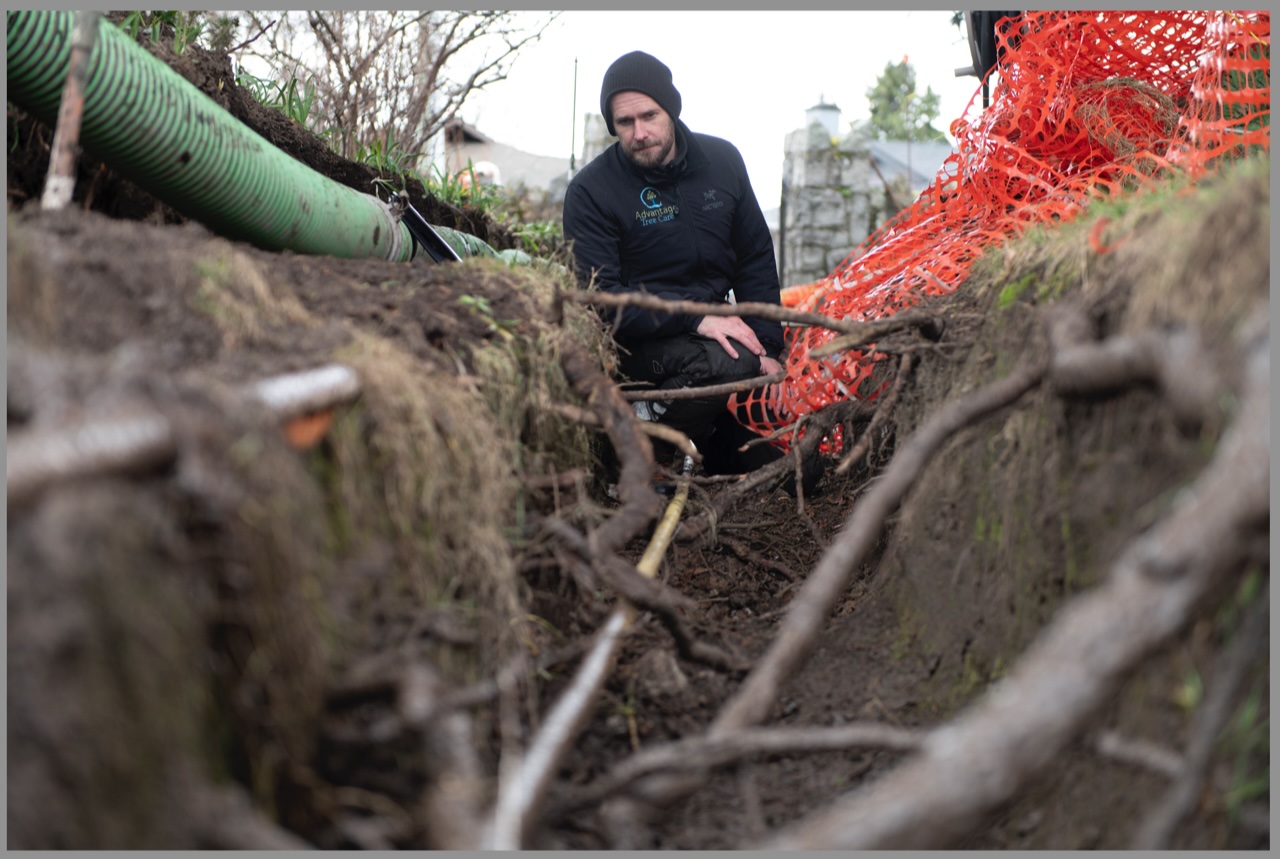
Avoid unnecessary digging, trenching, soil compaction and heavy equipment near the tree. Root damage can increase stress and, in some cases, affect structural stability.
4. Avoid Fertilizing a Drought-Stressed Tree
Fertilizer does not cure root disease or make up for a lack of water. It may encourage additional growth when the tree is already struggling to support its canopy. The Pacific Northwest guidance on drought injury in true firs recommends avoiding fertilization during drought.
5. Arrange an Arborist Assessment if Symptoms Progress
If the canopy is thinning, branches are dying or there are possible signs of root decay, have the tree assessed by an arborist. This is particularly important when a mature grand fir is near a house, driveway or area used by people.
A new lean, lifting soil around the roots or visible cracking at the base may indicate an urgent structural concern. Keep people away from the area and arrange prompt professional advice.
Can a Dying Grand Fir Recover?
It depends on the cause and how much damage has occurred.
A tree with mild drought stress may recover when growing conditions improve. Minor needle diseases can also be manageable. However, recovery is much less likely when substantial portions of the canopy are dead or when advanced root rot has damaged the root system.
Dead brown needles will not turn green again. Look instead for healthy new growth and whether dieback has stopped. Recovery from drought can take more than one growing season, and some damage may be permanent. In the meantime, dead branches can be removed through careful tree pruning to reduce the risk of falling limbs without putting extra stress on the tree.
Why Grand Fir Decline Matters for Victoria Homeowners
Grand firs can grow into very large trees. When an established tree develops serious root decay, the concern is not only whether it will survive, but whether it remains structurally sound.
Tree protection rules also matter. In Saanich, grand fir trees with a trunk diameter of 30 cm or more, measured at 1.4 metres above the ground, are protected. A permit is generally required before removing a protected tree, even if it is dead or dying. Other Greater Victoria municipalities have different bylaws, so always check the tree permit and bylaw rules for your property before arranging removal.
When to Call an Arborist
If your grand fir is showing unexplained browning, canopy dieback or possible root disease, an assessment can help identify the likely cause and what to do next. In some cases, improved care may be enough. In others, monitoring, further investigation or professional tree removal may be the safest option. If you are weighing up that decision, our post on whether you should remove your tree walks through the pros and cons.
Concerned About a Grand Fir on Your Property?
If your grand fir is showing browning needles, a thinning crown or possible signs of root disease, our ISA Certified Arborists can help you work out what is going on and what to do next. Advantage Tree Care provides tree health inspections and risk assessments across Greater Victoria, and when a tree cannot be saved, we handle safe tree removal and help you navigate the permit process.
Looking for an arborist Victoria homeowners can count on? We also work with homeowners in Saanich, Oak Bay, Esquimalt, Langford and Sidney.
Call us at 778-561-4502 or contact us online to book a grand fir assessment.