Ask ten people when to prune a tree and most of them will say winter. They’re not wrong. But they’re not completely right either, and here in Victoria the real answer has more to do with what the tree is doing than what the calendar says.
Winter pruning has some real advantages. So does pruning in the growing season, once the tree is fully leafed out. There are a couple of windows we do try to avoid, and evergreens (which make up a big chunk of the trees around here) play by their own rules. Here’s how our tree pruning crew thinks about it.
The Case for Winter Pruning
When people say “prune in winter” they usually mean late winter, while deciduous trees are dormant and before the buds start to swell. You can prune most of the year, but timing still matters, and there are good reasons winter became the default.
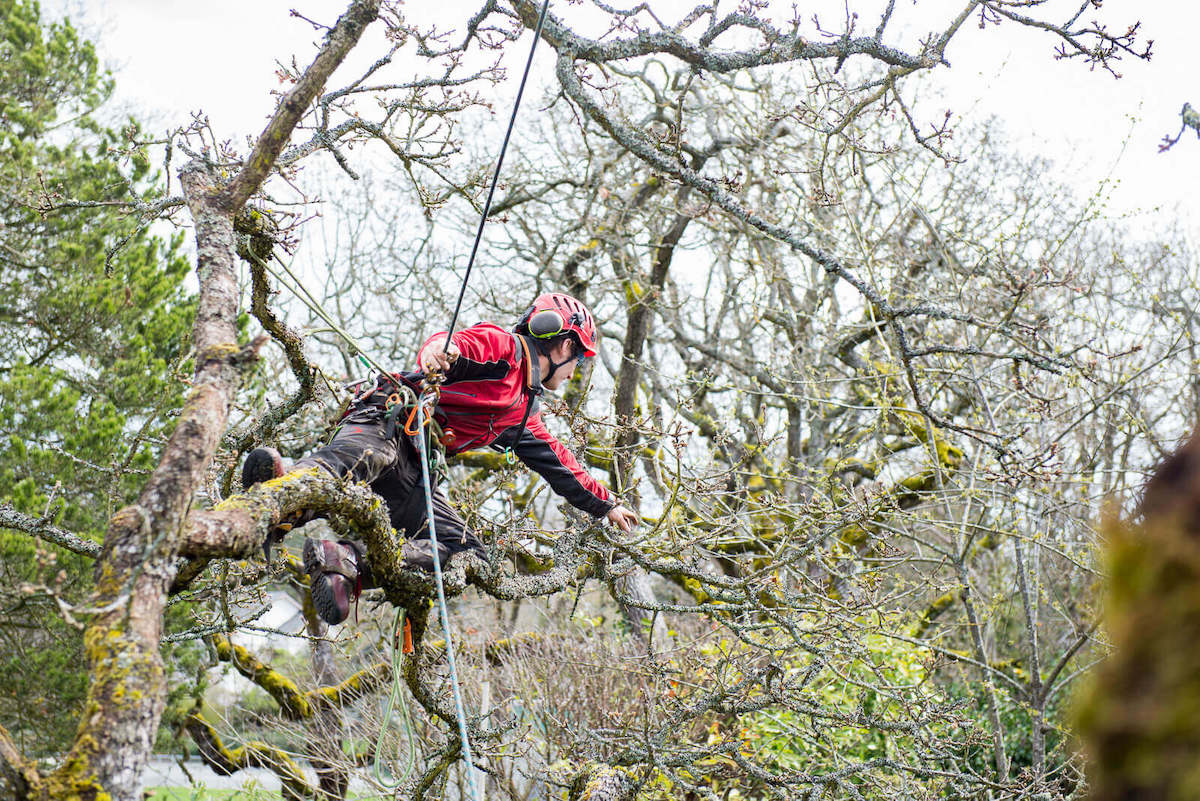
- You can see what you’re doing. With the leaves off, a big Garry oak in Fairfield is basically an X-ray of itself. Crossing limbs, weak unions, deadwood and old storm damage are all right there. That’s why we like winter for structural work.
- The tree has energy in the bank. Reserves are stored in the roots and trunk, ready to push spring growth.
- Cuts close up quickly once spring arrives. Prune in late winter and the tree gets to work sealing those wounds as soon as the growing season starts, so they don’t sit open for long.
- Less sap, fewer visitors. Most dormant trees don’t ooze much sap from a fresh cut, and oozing wounds are what draw in insects. (Maples and birch are the exception. More on them below.)
- Fewer pests and spores are around. Cold weather slows down a lot of the insects and fungi that would otherwise find an open wound.
- Less weight to handle. A tree with no leaves is a lot lighter. When our crew is lowering big limbs over a roof or a garden bed, that makes the job safer and easier on everything underneath.
- Fruit trees respond well. An apple or pear pruned in February puts its energy into the branches you left, which is how you shape the tree and set it up for better fruit. Some fruit trees have their own timing too, which we cover on our fruit tree pruning page.
One thing to know: winter pruning tends to wake a tree up. Take a lot off an apple in winter and you’ll often get a forest of watersprouts in spring. Sometimes that’s what you want. Often it isn’t.
The Case for Pruning in the Growing Season
Here’s the part that gets left out. Once the spring flush is over and the leaves are fully out, usually somewhere from late spring into summer, a tree is in full growing mode. It has already put its energy into spring growth, it’s making more every day, and it’s about as resilient as it gets. It’s well able to handle a good prune, and there’s less chance of it bleeding sap.
- Cuts close over faster. A tree builds new wood around a wound while it’s actively growing. In the dormant season that process mostly waits for spring.
- It slows regrowth down. Summer pruning has the opposite effect of winter pruning. If that apple keeps throwing watersprouts, a summer trim is how you calm it down.
- Some trees do much better. A flowering plum on a James Bay boulevard is a good example. Cherries and plums are prone to silver leaf and bacterial canker, which spread in wet weather. A cut made on a dry July day gives those diseases far less of a chance than one made in a wet January.
- Bleeders bleed less. Maples and birch push out a lot of sap if you cut them in late winter or early spring. It looks alarming but it doesn’t hurt the tree. Wait until they’re fully leafed out and most of that goes away.
- Pines are on their own schedule. You control a pine’s size in late spring by pinching back the new “candles” of growth. Cut a pine in winter and there’s no candle to work with.
So winter isn’t the only good time. For a lot of trees in a lot of yards, summer is every bit as good, and sometimes it’s better.

The Times We Do Try to Avoid
The winter vs. spring debate misses the point a bit. The bigger question is which few weeks to stay away from.
- While the leaves are coming out. When buds are breaking and new leaves are unfolding, the tree has just spent most of its stored energy and hasn’t started making it back yet. A heavy prune then hits it at its lowest point. So “spring pruning” really means late spring, after the leaves are full size. Not April when everything is still unfolding.
- Wet fall weather. Once the rains come back in the fall there are a lot more fungal spores floating around, and the tree is slowing down for the year. We keep big cuts on healthy trees to a minimum then, especially cherries, plums and arbutus.
- A heat wave or a long dry spell. Our summers are getting longer and drier. A stressed fir or cedar in August doesn’t need more stress, so we’ll wait for a cooler stretch (and water first if it’s been dry).
- An active bird nest. Under BC’s Wildlife Act it’s illegal to disturb an active nest. Nesting season on the South Coast is generally around March through August, so we check every tree and hedge before we cut. Eagle, osprey and heron nests are protected all year round.
And some things don’t wait for any season. A cracked limb over the driveway, or a branch hanging on the power line after a windstorm, comes down now. Same with deadwood. Taking off dead branches doesn’t stress the tree, so we’ll do it any time of year.
Evergreens Don’t Really Sleep
The whole “prune while it’s dormant” idea comes from deciduous trees. Evergreens keep their needles all year and keep photosynthesizing, just more slowly in winter. Around Victoria that matters, because a lot of what we look after is evergreen: Douglas fir, western redcedar, grand fir, arbutus, plus all the cedar and laurel hedges.
A lot of the evergreen pruning advice online is written for places with frozen ground and -20 winters. That’s not us. Our winters are mild and wet, so cold damage at a pruning cut is rarely the issue. The bigger stress for our conifers is summer drought, which is a big part of what’s behind the grand fir decline we’re seeing.
A few things to keep in mind:
- Most conifers won’t regrow from bare wood. Cut a cedar hedge back past the green and that patch is likely to stay brown. Yew is the exception and will bounce back from older wood.
- Light and regular beats hard and rare. A Gordon Head cedar hedge trimmed a little each year after the nest check stays much healthier than one that gets hacked back every five years.
- Some browning in fall is normal. Cedars shed their older inner foliage every autumn. It looks worrying but it’s usually just the tree tidying up, not a pruning problem.
- Arbutus wants as little pruning as possible. When it does need work, dry summer weather is best.

So, Winter or Spring?
It depends what you want the pruning to do. That’s the question we start with on every site visit.
| What you’re after | When it usually works best |
|---|---|
| Fixing structure, or big cuts on a deciduous tree | Late winter, while it’s dormant |
| Slowing down a tree that grows too fast | Summer, once the leaves are fully out |
| Keeping the flowers on a magnolia, dogwood or rhodo | Right after it finishes blooming |
| Cherries, plums and arbutus | Dry summer weather |
| Shaping a pine | Late spring, at the candle stage |
| Cedar and laurel hedges | Late spring to late summer, light and often |
| Dead, broken or hazardous limbs | Now |
These are rules of thumb, not hard rules. Every tree, yard and year is a bit different. A cold late spring or a dry September can shift things by weeks. For a full month-by-month calendar and species list, see our post on the best time to prune trees in Victoria. And don’t forget that many trees here are bylaw-protected, so check the tree permit and bylaw rules before anyone starts cutting.
Not Sure Your Tree Can Wait?
You don’t have to book everything for February. Our ISA Certified Arborists can look at your trees, tell you what they need, and get the work done when the tree is ready for it, winter or summer. We offer tree pruning across Greater Victoria and handle any permits along the way.
Looking for a Tree Service Victoria homeowners can count on for their oaks, fruit trees and hedges? We also work in Saanich, Oak Bay and Esquimalt.
Call us at 778-561-4502 or book a free site visit to plan your pruning.